
The Basic Idea
A wireless wall sconce looks like a conventional wall light, but it does not draw power from cable hidden inside the wall. A mounting plate stays fixed while a battery-powered or rechargeable light module produces the light. Depending on the design, the module may attach with magnets, a bracket or a twist-lock fitting. This avoids electrical work, but it also means the owner must plan for charging, battery replacement and access to the controls.
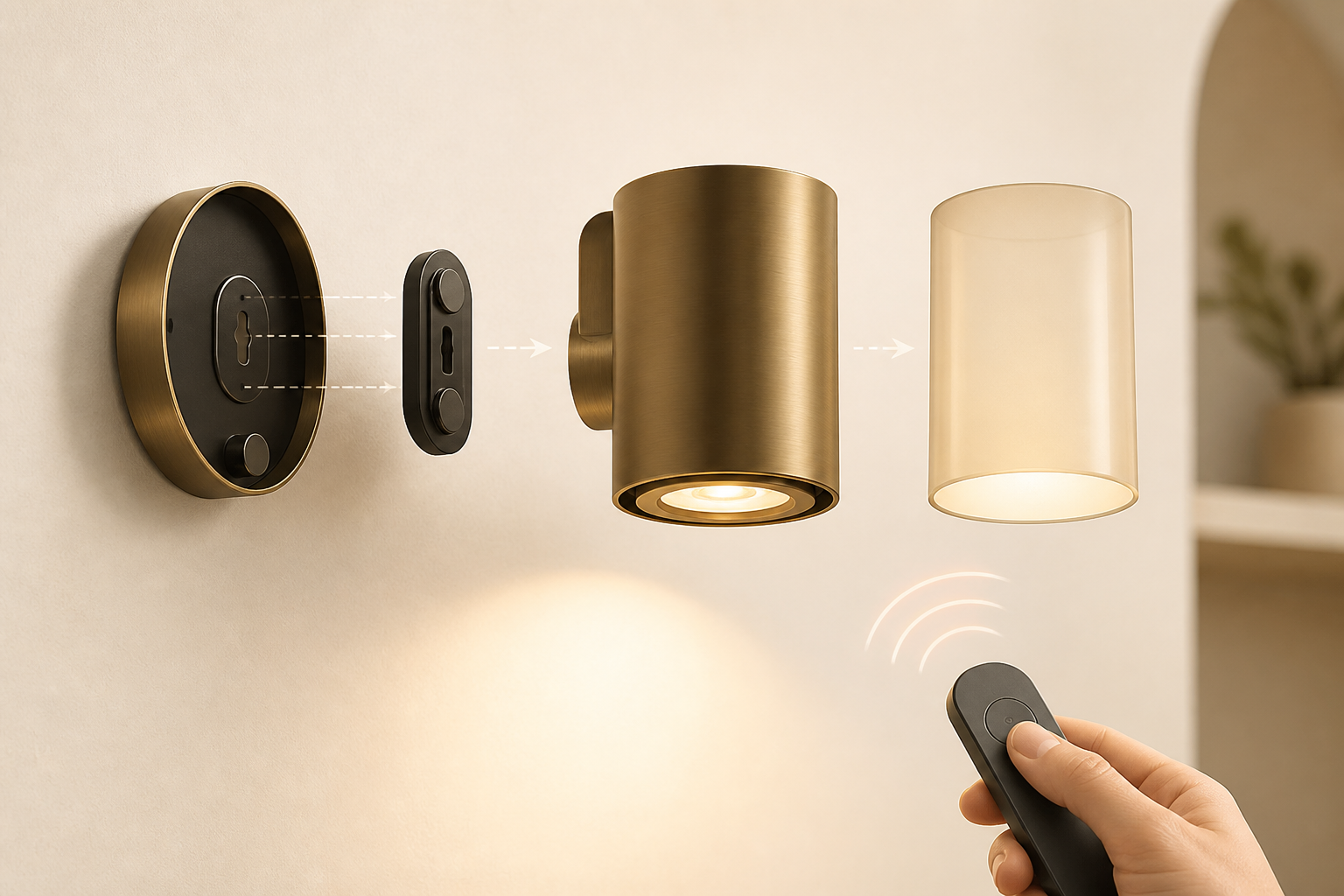
Rechargeable LED Modules
Rechargeable models store energy inside a removable bulb or light module. When the charge is low, the module is detached and connected to a compatible USB charger; some complete fixtures charge in place. Runtime is not universal: high brightness, frequent use and cold temperatures can reduce the time between charges. Before buying, check whether the charging cable is included, whether the battery is replaceable and whether the fixture can still be used while charging.
- Choose a mounting point where the module can be removed without moving furniture
- Avoid leaving a rechargeable module permanently connected unless the manufacturer permits it
- Treat advertised runtime as a best-case estimate until you know the brightness setting used
Battery-Powered Lights
Models using replaceable batteries can be restored quickly without waiting for a recharge. The tradeoff is recurring battery cost and waste. Battery life depends on the battery type, LED output, timer use and how often the light is switched on. Never mix old and new batteries or different battery chemistries, and remove batteries if the fixture will be stored for a long period.
Remotes, Dimming & Timers
A remote can make bedside or high-mounted lights easier to use. Common functions include on/off, brightness steps, warm-to-cool color selection and an automatic timer. Confirm that the remote is included rather than shown only as an optional accessory. Also check whether one remote controls multiple sconces together, whether settings are remembered after power-off and whether the fixture still has a physical control if the remote is lost.
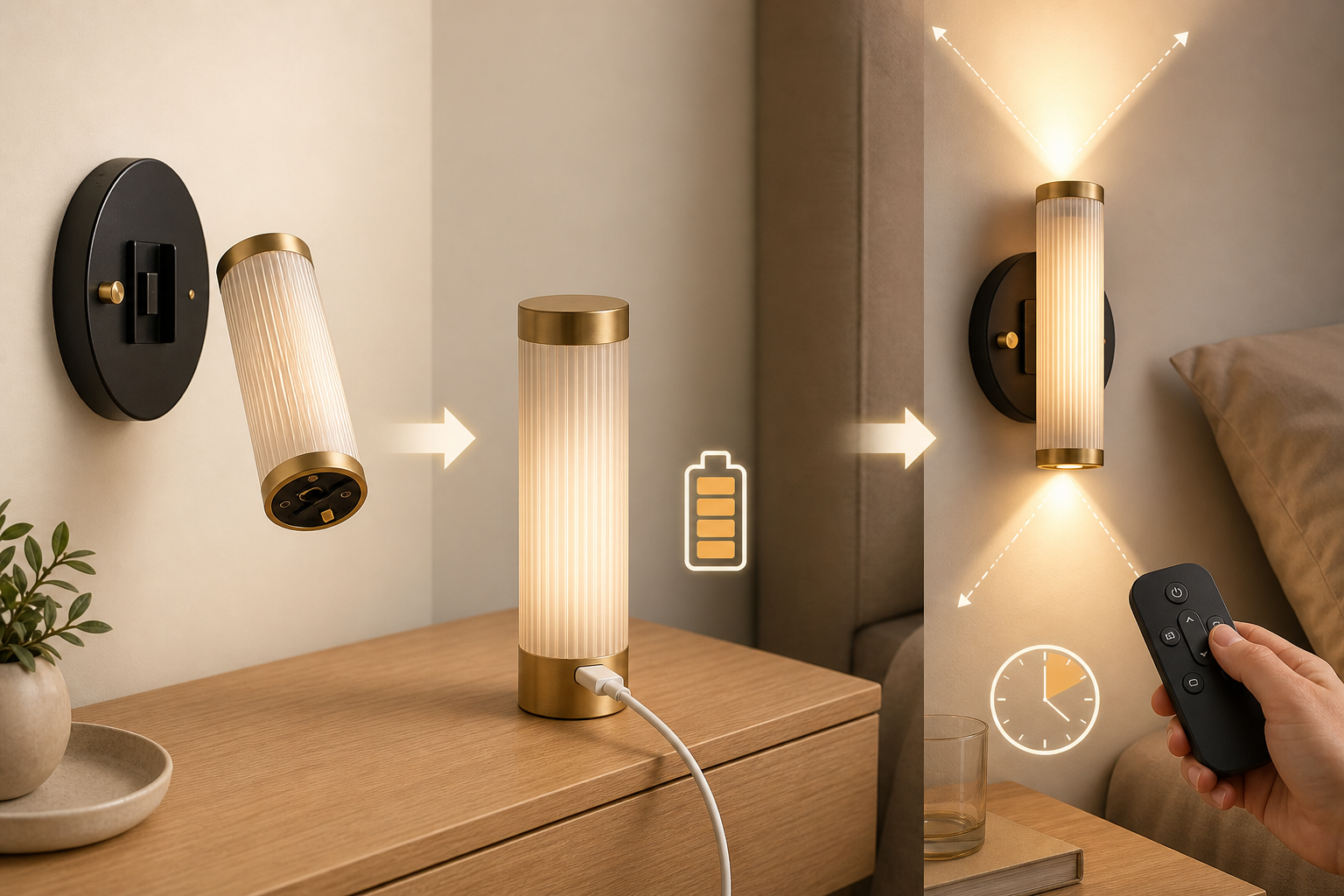
Step-by-Step Mounting
First, hold the fixture at the intended height and test the light before making holes. Mark the plate level, then use only the mounting method approved for the wall surface and fixture weight. Screws and suitable anchors are usually more dependable than adhesive for heavy fixtures; adhesive needs a smooth, clean, dry surface and the full curing time stated by the manufacturer. Attach the plate firmly, fit the light module, then gently test for movement before daily use.
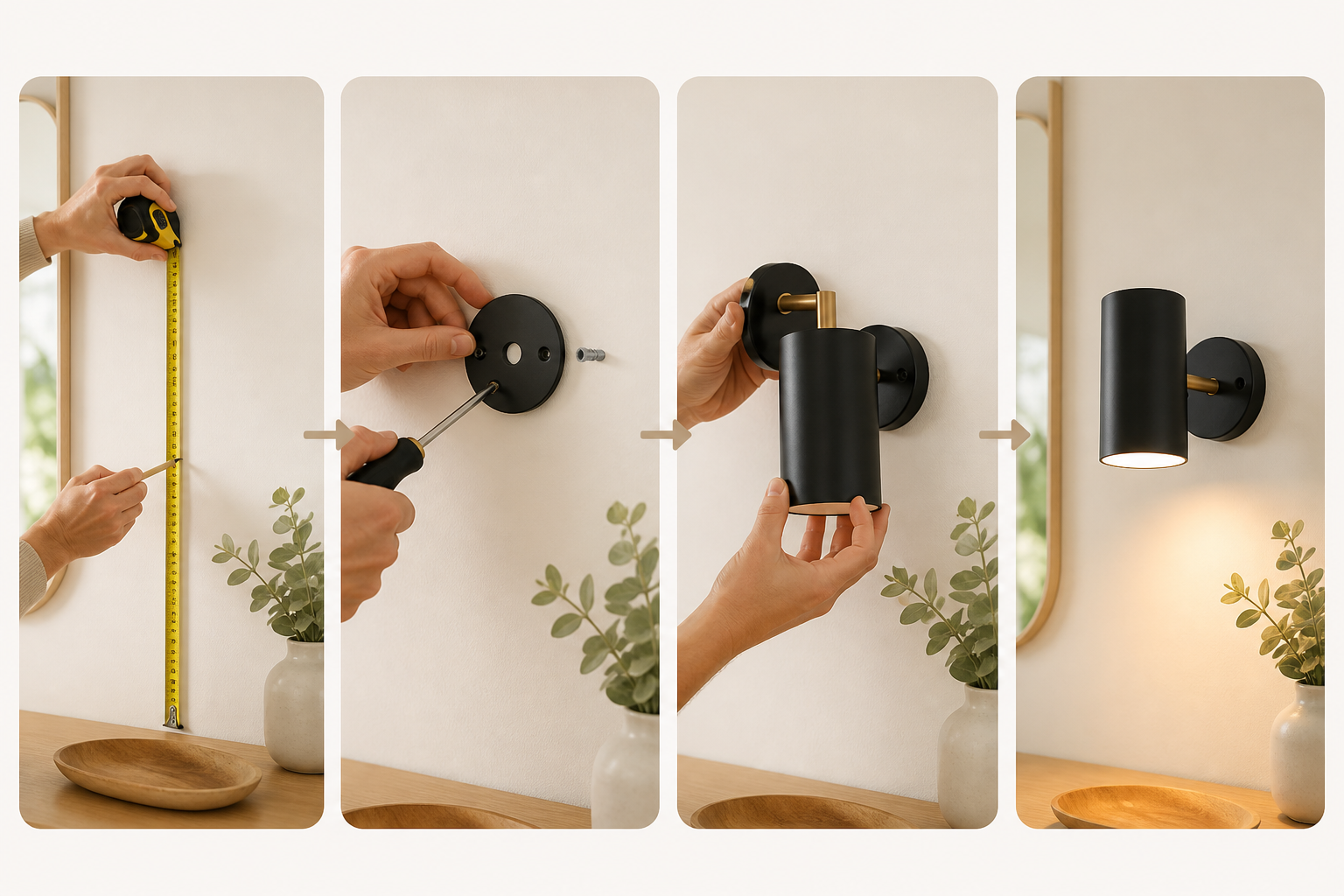
- Check for hidden pipes and electrical cables before drilling
- Do not mount above a crib, bed or seat unless the fixing method is secure for the load
- Keep the charging port and release mechanism reachable
- Retest adhesive mounts regularly, especially in warm or humid rooms
Brightness & Placement
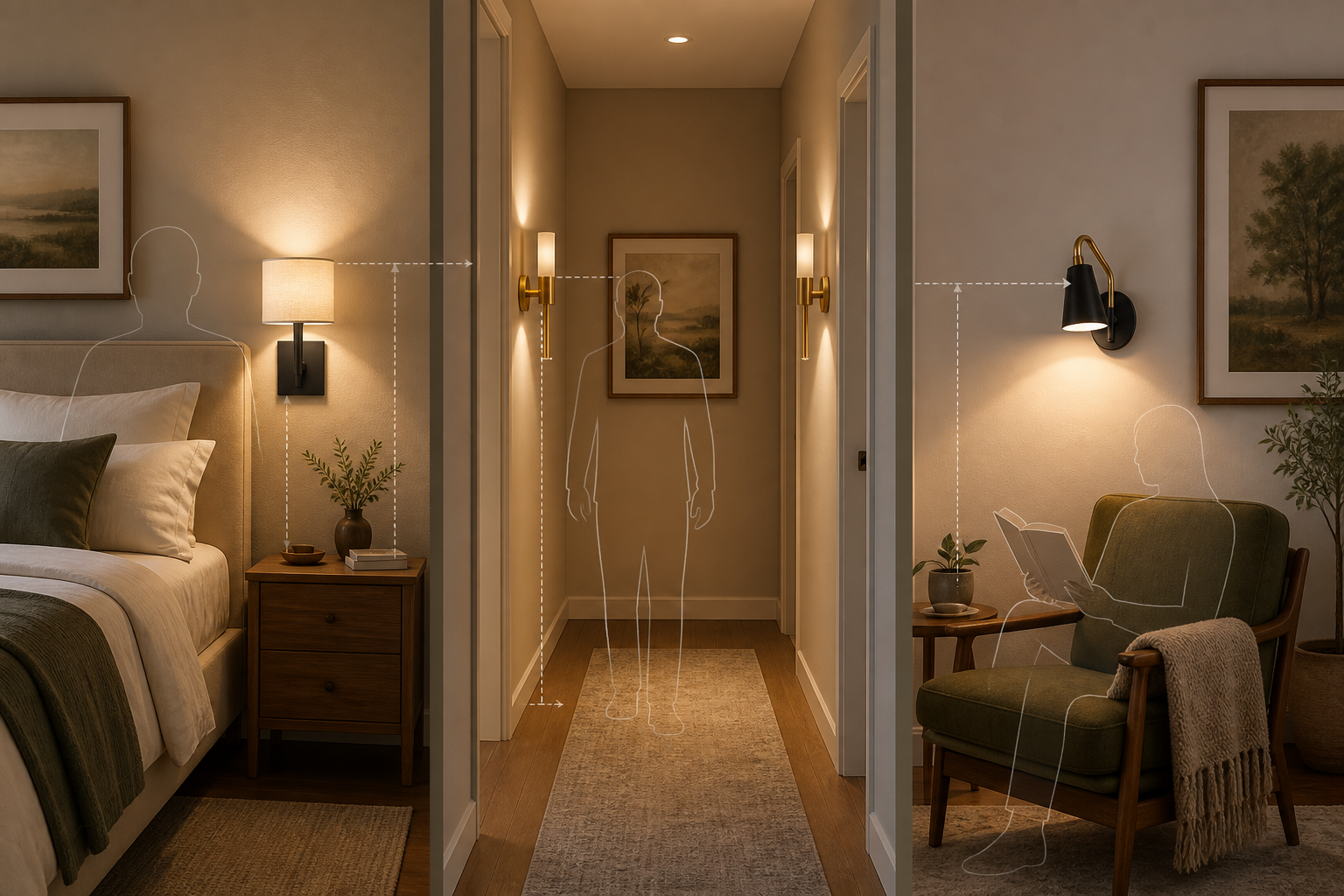
Wireless sconces are most convincing as accent, ambient or close-range reading lights. They should not be assumed to replace a wired ceiling fixture unless verified lumen output supports that use. For bedside reading, place the beam where it reaches the page without shining directly into the eyes. In a hallway, keep fixtures clear of doors and shoulders. In a living-room reading corner, an adjustable head is more useful than a decorative fixed beam.
Mistakes to Avoid Before Buying
The most common disappointment is expecting wired-light brightness and zero maintenance from a small rechargeable fixture. Other avoidable problems include mounting adhesive onto textured paint, placing the light where it is awkward to remove, overlooking whether two fixtures are sold as a pair, and assuming a remote or charger is included. Read the box-contents list, mounting instructions, verified dimensions and return policy before ordering.